

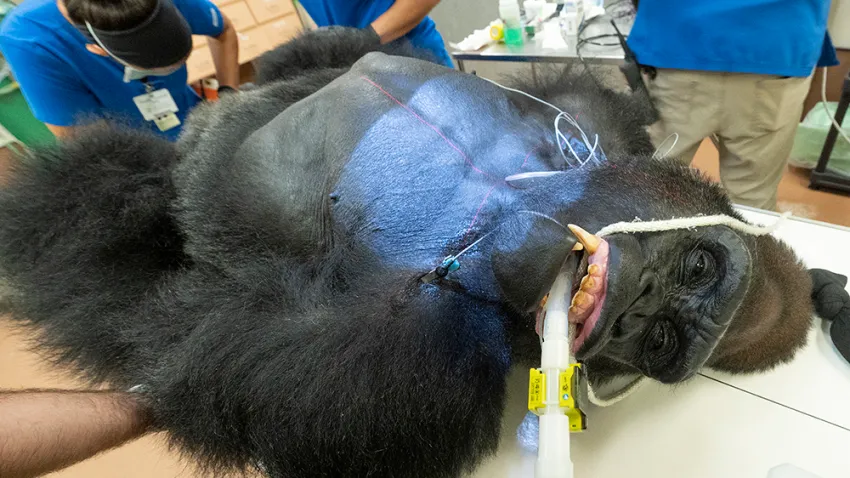
In 2021, Zoo Miami called on a diverse team of veterinary and human medical specialists to help one very impressive patient — Barney, a 385-pound silverback gorilla.
Barney had been showing signs of a persistent cough, and his carers knew it was time for a more thorough evaluation. For a species known to suffer from cardiovascular disease as they age, this wasn’t something that could be overlooked.
A Comprehensive Examination
Barney underwent a full series of diagnostics: chest radiographs, blood collection, and even a bronchoscopy performed by a pulmonologist to evaluate his lungs. Alongside this, a detailed cardiac assessment was crucial.
Veterinary cardiologist Dr Dewey Carpenter performed a transthoracic echocardiogram (ultrasound of the heart) to assess the structure and function of Barney’s heart. This imaging allowed the team to evaluate chamber size, heart muscle thickness, and contractility — key information for monitoring gorillas, who can be predisposed to both hypertension and cardiomyopathy.
What the Results Revealed
The findings showed Barney’s blood pressure was within normal limits, but his heart was mildly enlarged. In gorillas, this can sometimes be a sign of underlying disease — yet in Barney’s case, it was felt to be within the expected range for his age and size. Importantly, no evidence of advanced cardiac dysfunction was identified at the time.
With this information, Barney’s ongoing treatment plan for hypertension and heart health could be carefully adjusted, ensuring he continued to receive the most appropriate care.
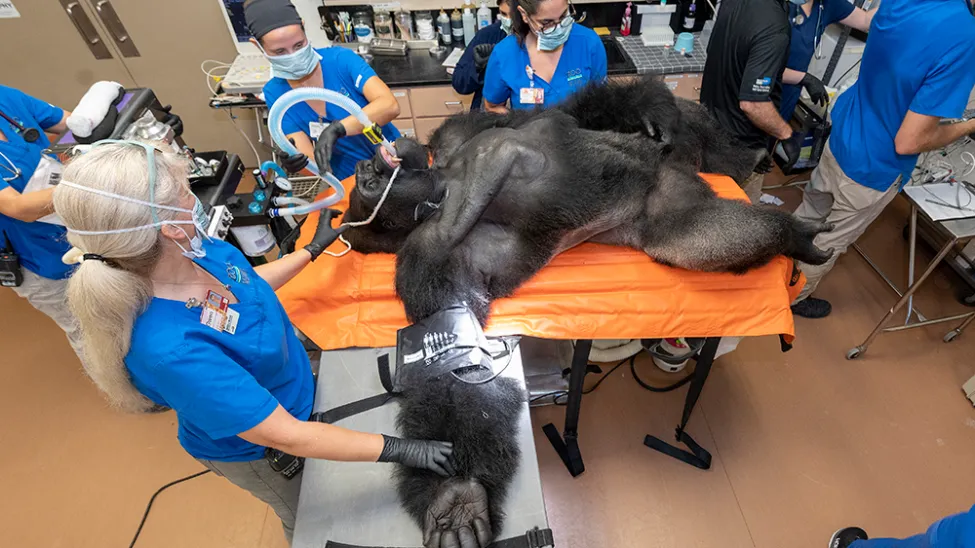
A Collaborative Effort
Cases like Barney’s highlight the remarkable collaboration required when managing the health of exotic species. Specialists from zoo medicine, pulmonology, and cardiology came together, each contributing their expertise to ensure no detail was missed.
Why It Matters
While most of our patients at Sawgrass are dogs and cats, the principles of veterinary cardiology are universal. Whether we’re scanning the heart of a Great Dane with dilated cardiomyopathy, a Burmese cat with hypertrophic cardiomyopathy, or, in this extraordinary case, a silverback gorilla, the goal is the same: to detect disease early, understand it thoroughly, and guide the best possible treatment plan.
Barney’s story is a reminder that cardiology doesn’t just save lives — it safeguards quality of life. And sometimes, it even helps a gorilla get back to enjoying his days in the Florida sun.